

How to get a support ticket backlog under control in one week: a day-by-day guide
A focused seven-day sprint can bring a support ticket backlog under control. Whether you clear every last ticket depends on the size of the pile and your team's capacity, and we'll check that before you start. The plan is one goal per day. Consolidate everything into a shared inbox, sort by age and urgency, batch similar tickets, apologise properly to the longest-waiting customers, then put guardrails in place. Most small teams don't need more hours at first. They need a clearer order of attack and one place to work from.
If you're staring at hundreds of unanswered tickets, I've seen this situation many times, and it's fixable. I wrote this guide for small teams juggling live chat and email who want to feel on top of things again. ☕
Why support ticket backlogs build up (and why it's rarely anyone's fault)
Picture a Monday morning. The support email is open in one tab, a second inbox holds messages forwarded by the founder, and a live chat window is flashing orange. You answer one thing and three more appear.
That feeling isn't a sign you're bad at your job. In my experience, a backlog is usually a workflow problem before it's a people problem, though staffing, ticket volume and product complexity can play a part too.
A backlog grows whenever incoming work outpaces your team's effective capacity for long enough. Effective capacity can drop without anyone leaving. Tickets get more complex, customers contact you twice about the same thing, or agents lose time to admin. Queueing theory (the study of how waiting lines behave) has a useful rule of thumb here: as a team gets close to its maximum throughput, waiting times tend to climb sharply rather than gradually. It isn't a measurement of your team, but it explains why a small shortfall can create a big pile.
In small teams, the usual culprits are:
- Email and chat living in separate tools, so nobody has the full picture
- No clear owner for each ticket, so everyone assumes someone else has it
- One-off spikes after a launch, a sale or an outage
- Replies that need a teammate's input and quietly stall
Then the snowball starts. Old tickets prompt follow-ups ('Just checking you got my message?'), which create duplicate conversations, which add to your volume. Expectations don't help either. Zendesk's CX Trends 2023 report found that roughly seven in ten consumers surveyed expect immediate service when they contact a company. It's a global survey rather than a UK-specific one, but it shows why waiting hurts.

One quick definition. For a small team, a ticket counts as backlog the moment it's waiting beyond the response time you've promised (or would promise, if you've never written it down). It has nothing to do with hitting some magic number of tickets.
Before you start: where do I begin with hundreds of unanswered tickets?
Here's the honest answer: don't start replying yet. An hour of looking first will save you far more than an hour of replying blind.
- Take a snapshot. Note total open tickets, the oldest ticket, the average wait and the top three topics. Rough numbers are fine. You just need a 'before' to compare against on Friday.
- Do a capacity check. Estimate how many tickets arrive per day and how many your team can realistically resolve. The backlog only shrinks when you resolve more than arrives. If you resolve 40 a day and 35 come in, you're only clawing back five a day, so a 300-ticket pile won't vanish in a week. In that case, narrow your goal, borrow temporary help, or get incoming volume under control first.
- Agree a realistic goal. 'No tickets older than 48 hours by Friday' works well when the maths supports it. If it doesn't, aim for 'oldest ticket halved' or 'every blocked customer answered'.
- Block out protected time and chat cover. Put the sprint in everyone's calendar and decide who handles live chat, so new conversations don't join the pile.
- Agree what 'cleared' means with your manager or founder. Is it every ticket answered, resolved, or under a certain age? Settle it now so nobody moves the goalposts on Thursday.
Got your snapshot? On to Day 1.
Day 1: Get everything into one shared inbox
Goal for the day: every conversation lives in one place, with nothing hiding in personal inboxes or forgotten chat transcripts.
A shared inbox won't fix a capacity shortfall. What it fixes is the thing that makes a backlog invisible: scattered conversations with unclear owners. Whichever customer support software you use, the steps look like this.
- Forward your support email addresses into a shared inbox, so messages sent to support@ or hello@ become tickets the whole team can see, assign and track.
- Add a live chat widget to your site or app, so new chats land alongside email tickets. One queue, two channels.
- Invite everyone who touches customer conversations. That includes the part-time colleague, the developer who knows the bug and the founder who still answers the odd email. If your tool charges per seat, check the cost first, but leaving experts out is a false economy.
- Sweep for stragglers. Import recent unanswered emails and ask colleagues to check their own inboxes for customer messages that ended up there by accident. There's always a handful.
- Run a sanity check. Send a test email and start a test chat, then confirm both turn up where you expect.
Disclosure: I'm on the Sonny team, and Sonny is one shared-inbox tool that handles email and chat in one queue (it offers a free trial; check current pricing and terms on its site). Any help desk that does the same will work for this plan, so choose what suits your team and budget.

By the end of today, the pile might look bigger than you expected. That's normal. You haven't created more work, you've just found all of it.
Day 2: Sort the backlog by age and urgency with tags and filters
Goal for the day: know exactly what you're dealing with, with every ticket labelled.
Today is triage rather than answering. Think of a hospital waiting room: someone has to work out who needs help most before anyone is treated.
- Filter by oldest first, then tag each ticket by topic. Billing, bug, how-to, refund and feature request cover most small teams.
- Add urgency tags. Keep them blunt: 'customer blocked', 'payment issue', 'can wait'. Someone who can't log in or has been charged twice goes to the front, whatever their ticket's age.
- Decide: reply or close? Reply if the issue could still matter to the customer, even if the ticket is weeks old. Close with a short, friendly note only if it's clearly resolved or obsolete, such as a question about an offer that ended months ago. Before closing, check for loose ends like an unresolved refund, a complaint, or a personal data request. In the UK, data requests under UK GDPR generally have to be answered within one month, so those should never sit unnoticed. If you're unsure, reply. Never close silently.
- Merge duplicates. This is often the quickest way to shrink the pile, because impatient customers frequently write more than once.
- Use internal notes for context ('Customer already tried resetting password, escalate to Priya') so teammates don't have to ask.
- Tag anything waiting on a teammate (for example 'needs dev input') and give it a named owner, so it doesn't stall quietly.
Now look at your tickets by age, topic, channel and owner. That tells you whether you've had a temporary spike or whether something in your workflow needs fixing for good. We'll come back to that on Day 7.
Days 3–5: Batch similar tickets and reply in bulk
Now the real work begins. Each day has a different focus:
- Day 3, urgent and blocked customers. Work through everything tagged 'customer blocked' or 'payment issue' first.
- Day 4, the biggest topic clusters. Take your most common tag and clear it in one go.
- Day 5, the long tail. Mop up the odd and awkward ones, check anything reopened, and review your saved replies.
Use your capacity check as a pace guide. If you need to resolve 60 tickets a day to hit your goal and you're managing 40, say so on Day 3 rather than Friday afternoon. That's the moment to bring in a helper or adjust the target.
Here's a simple rule for when urgent work swallows your day. If new blocked or payment tickets arrive, or chat gets busier than your planned cover, pause batching, deal with those first, and pick the batch back up afterwards. Don't let a sprint turn into ignoring the customers who need you right now.
Why batching support tickets works
Every time you switch between a refund query, a bug report and a how-to question, your brain pays a small tax. Answering a run of similar questions tends to get quicker as you go, and your answers become more consistent. Grouping tickets by intent also makes repeat questions easy to spot, which is useful later.

How to batch replies without sounding like a robot
People often confuse 'bulk' with 'identical'. The same Zendesk report found that a similar share of consumers expect personalised interactions, so treat a saved reply as a starting point, never the finished product.
Imagine an online shop with forty tickets asking where an order is. Create a view for delivery questions and write one saved reply explaining how to check tracking. Then add the customer's name and their actual order status to each one. It's much quicker than writing forty replies from scratch, and it still feels human.
A few habits that help:
- Build a small library of saved replies for your top five questions. Five good ones beat thirty you can't find.
- Keep urgent or emotionally sensitive tickets out of bulk batches. They deserve a bespoke reply.
- Assign topic owners. If Sam knows billing best, billing tickets go to Sam.
- Chase specialist input on a clock. For tickets waiting on a teammate, send the customer a short holding update with a realistic timeframe, and ask the specialist to answer by end of day.
- Use automation carefully. Suggested replies, or an AI assistant trained on your own help docs, can take the edge off repetitive questions, but have a human check anything before it goes out.
- Keep a daily scoreboard of tickets open, oldest ticket age and tickets closed. Watching the oldest ticket age fall is oddly motivating. 🎉
Day 6: Apologise well to the longest-waiting customers
Goal for the day: personally contact the customers who've waited longest, especially anyone you haven't yet answered.
By now the bulk of the pile is gone, and you have room to say sorry properly. A sincere apology won't guarantee loyalty, but it helps repair trust. A stock one tends to make things worse.
The structure I use is simple:
- Acknowledge the wait, specifically.
- Apologise once, and mean it.
- Solve the problem in the same message.
- Say what you're changing, briefly, but only if it's true.
Here's what a stiff template sounds like:
Dear Customer, we apologise for any inconvenience caused by the delay in our response. We value your business and appreciate your patience. Your query is now being looked into.
Nobody has ever felt better after reading that. Here's a warmer version you can adapt:
Hi Jo, I'm really sorry it took us nearly three weeks to get back to you about your invoice. That's far too long, and it's on us. I've checked, and you were charged twice in March. I've refunded the duplicate, and you should see it in 3 to 5 working days. We've set up a daily inbox check so messages like yours don't slip through again. If anything still looks off, reply here and I'll sort it myself.
It names the wait, owns it, fixes the problem and doesn't grovel. One caution: that example promises a refund and a process change, so only promise what you can deliver. If a refund isn't appropriate or a fix isn't in place yet, say what you can do and when they'll hear from you.
A tip on tone, especially for UK customers: avoid over-apologising. Three 'sorry's in one paragraph reads as panic rather than sincerity. Keep it plain and honest, and let the solution do the talking. If it suits your business, a small gesture such as a credit or extension can help, but a well-fixed problem often means more than a freebie.
Finally, flag anyone at risk of leaving, such as long-standing customers, bigger accounts or anyone who's chased more than twice, and ask a founder or senior teammate to follow up personally.
Day 7: Set guardrails to keep the ticket backlog from returning
Goal for the day: turn a one-off sprint into a workflow that lasts.
Clearing the pile is satisfying. Keeping it clear is the real win. Here's what I'd set up today.
- Set a response-time target you can actually hit. Base it on what your capacity check showed, not on what sounds impressive, and split it by priority. For example, aim for same working day on blocked or payment issues and one to two working days for everything else. Express it in working hours, so weekends and bank holidays don't make you look like you've missed it. Publish it internally, and tighten it only once you're meeting it comfortably.
- Build a short daily routine. Name who triages each morning, who covers chat and who handles escalations. Give every open ticket an owner and a next action, including tickets waiting on the customer or a teammate. Then spend 10 minutes each day on backlog size, oldest ticket age and anything nearing its target. Saved views like 'waiting over 24 hours' and 'unassigned' will surface ageing tickets early.
- Fix the source. Look at which questions caused the most tickets this week, then update your help docs and saved replies. Every question answered in a help article is potentially a ticket you won't get next month.
- Plan for spikes. Put a rota in place for launches and sales, and set up an auto-reply with honest expectations ('We're busy today, expect a reply within 24 hours'). In my experience, customers forgive a warned wait far more readily than a silent one.
- Review your capacity numbers weekly. If incoming volume still regularly outpaces what your team can resolve, no process will hold the line. That's the point to make the case for more hours, more people or fewer ticket-causing problems upstream. If you use automation to route or tag tickets, check it for misroutes at the same time.
- Celebrate. A small team win is worth marking. 🍰
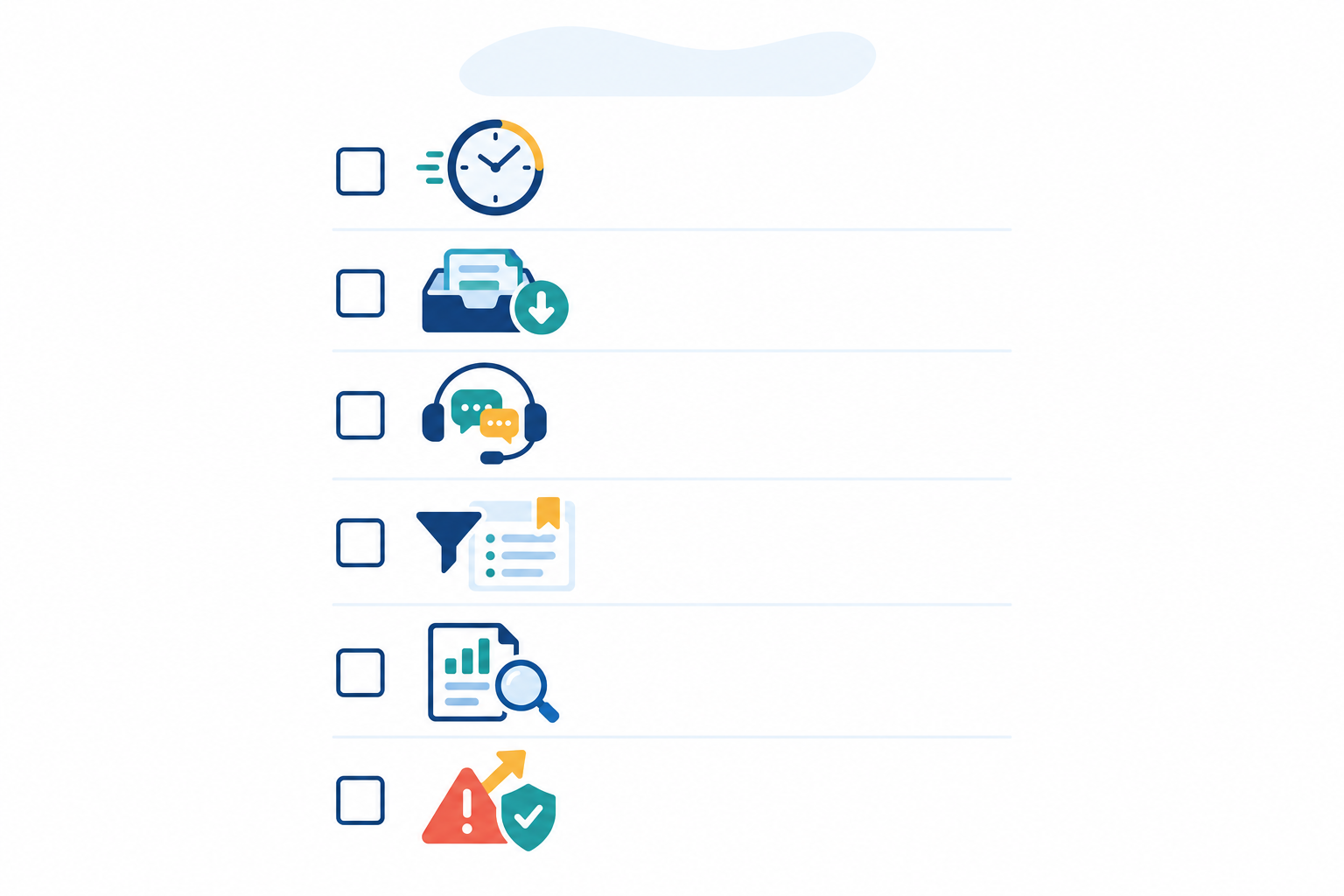
One more thing that helps with the 'I thought you had it' problem: send any unassigned ticket to a monitored triage queue, and alert a team lead when a high-priority ticket is close to its target.
What to do if one week isn't enough to clear the backlog
A very large or very old backlog may need a second week, and that's perfectly okay. A sprint is a framework, not a promise.
- Prioritise by customer impact, not ticket number. A blocked customer from yesterday matters more than a how-to question from last month.
- Bring in temporary help. A short all-hands day or a colleague from another team lending a few hours can shift a lot.
- Answer new tickets promptly, so the pile can only shrink while you chip away at the old ones.
- Be honest about the gap. If incoming volume stays higher than your throughput, the fix is more capacity or less demand, not a faster sprint.
Progress counts, even when it isn't finished by Friday.
FAQ: support ticket backlog questions
Where do I start with hundreds of unanswered tickets?
Move everything into one shared inbox, then count what's open, how old it is and what it's about. Do a quick capacity check so your goal is realistic, sort by age and urgency, and work through the pile in batches.
Should I reply to old tickets or close them?
Reply if the issue could still affect the customer, even if it's weeks old. Close only if it's clearly resolved, a duplicate or no longer relevant, and there's no outstanding billing, account, data request or complaint. Add a short, friendly note, and never close silently.
How do I apologise for slow replies without sounding scripted?
Be specific about how long they waited, say sorry once and solve their problem in the same message. Skip stock phrases like 'we value your business' and only promise what you can deliver.
How do I keep a support ticket backlog from returning?
Set a response-time target based on your real capacity, assign daily triage and chat cover, and use saved views to catch ageing tickets early. If volume keeps outrunning capacity, you'll need to deal with that too.
Can a small team clear a ticket backlog without extra hires?
Often, yes. Consolidating tools, batching similar tickets and using saved replies can free up a lot of time. But if incoming volume is consistently higher than your team can resolve, you'll need extra capacity, even if it's only temporary.
Your next step
A backlog feels enormous when it's scattered across tools and inboxes, and much more manageable once it's in one place with a plan attached. Today, take your snapshot and do the capacity check. Those two small jobs tell you what a realistic goal looks like, and everything else follows from there. Even if Friday arrives and a few tickets are left, you'll have a sorted queue and the habits to keep it under control.