
Unlimited Agents, Unlimited Growth: How Flat-Rate Help Desk Software Supports Multi-Brand Teams
If you're managing customer support for more than one brand, per-seat pricing can quietly punish you every time you grow. Every new hire, seasonal helper, or brand specialist becomes a line-item negotiation instead of a quick operational decision.
Sonny's flat-rate model (currently listed at £19.99/month for unlimited agents on its published pricing page) means you can add seasonal staff, brand specialists, or entire new teams without opening a new invoice line every time. That's the real difference between help desk software that scales with you and software that charges you for scaling. As always with pricing, terms can change, so check the current plan details and fair-use policy before committing.
In this guide, we'll explain why per-seat pricing creates a hiring freeze for multi-brand teams, what unlimited agents means in practice, how to add seasonal or brand-specific staff without a contract headache, how reporting works across brands, and what the long-term savings could look like.
The hiring freeze caused by per-seat help desk pricing
Picture this: you run customer support for three e-commerce brands with one lean team of six agents. Your current help desk software charges somewhere in the £15–£25 per seat, per month range, a fairly typical band for mid-market support platforms. That's manageable when your team is stable. But teams running multiple brands are rarely stable, and that's part of the point of having multiple brands in the first place. Demand ebbs and flows differently for each one, often at completely different times of year.
Here's where it gets frustrating. Say Black Friday is coming and one of your brands is about to get busy. You know from last year's data that you'll need three extra agents for about six weeks to keep response times reasonable. Sounds simple enough, right? Except when you run the numbers, three extra seats at a hypothetical £20 each is an extra £60 a month.
On its own, that doesn't sound like much. But many seat-based platforms don't let you add seats for six weeks and then remove them cleanly. You may be locked into a monthly minimum or annual commitment, meaning a six-week staffing need can turn into a 12-month cost.
Run that forward and the picture changes. Three extra seats at £20 for a full year, because your contract wouldn't let you scale down, is £720 you never actually needed to spend. Multiply that across two or three brands with staggered peak seasons, and you're looking at a genuinely uncomfortable line item, one that has little to do with how many support conversations actually happened and everything to do with contract structure.
So what happens? Managers hesitate. They stretch the existing team thinner instead of hiring the temporary support they know they need, because the administrative cost of adding and removing seats outweighs the operational benefit. I've heard this described, only half-jokingly, as a "hiring freeze by spreadsheet." Nobody explicitly decided not to staff up; the pricing model made the decision for them.
The real cost isn't just the wasted £720. It's slower response times, frustrated customers, and burnt-out agents covering three brands' worth of tickets during peak season because bringing in help felt like more trouble than it was worth.
What does "unlimited agents" mean for support software?
"Unlimited agents" sounds like a marketing phrase until you work out what it changes operationally. In plain terms, it usually means a few things. You pay one flat monthly fee no matter how many people log in, whether that's three agents or thirty. Adding someone to the help desk becomes an IT and permissions task, not a budget conversation. Seasonal hires, contractors, or brand specialists can join for a week or a quarter without changing your bill. And your support software line item stays flat whether it's a quiet February or a chaotic December.
With Sonny specifically, the flat rate is listed at £19.99/month, and unlimited agents is one of the headline features. That said, "unlimited" is a term worth reading closely with any vendor. Check whether the plan also includes unlimited conversations or whether a fair-use cap applies once your ticket volume reaches a certain level.
You should also confirm whether reporting, integrations, and shared inbox features are included at every tier or reserved for higher plans. Review the contract terms too: monthly rolling versus annual commitment can matter just as much as the headline price.
Most reputable providers, Sonny included, publish these details on their pricing page or will confirm them directly if you ask. Take five minutes to check before you migrate a multi-brand team.
The practical upshot, assuming the plan meets those requirements, is that your customer support software stops being a cost that grows in lockstep with your team. It becomes a fixed cost you can budget around, much like a shared collaboration tool or project management licence.
Add seasonal or brand-specific support staff without extra seat costs
Here's what the workflow looks like once seat count stops being a financial decision. Let's say your homeware brand is heading into a spike, perhaps because of a product launch or the November shopping period, while your two other brands are operating at normal volume.
- Identify the need early using last year's data. If November doubles ticket volume for one brand, plan the temporary hire a few weeks ahead rather than scrambling once the queue backs up.
- Add the agent directly to the platform. With unlimited-agent pricing, this is a permissions and onboarding task, not a procurement request. There's no new invoice line or wait for finance sign-off.
- Assign the agent to the relevant brand inbox or tag. Most modern help desk software, including Sonny, lets you segment inboxes or apply brand tags so a seasonal hire only sees tickets for the brand they support.
- Remove access when the season ends. Because there's no seat to cancel or contract clause to negotiate, offboarding is just as simple as onboarding. You're not paying to keep a seat "just in case," and you're not stuck justifying a seat reduction to a vendor.
The difference this makes in practice is bigger than it sounds. One operations lead I spoke with described the old process under seat-based pricing as "a two-week lead time just to get sign-off on adding someone for six weeks." By the time approval came through, the peak was half over.
With flat pricing removing that friction, the same decision became something the team lead could make on a Tuesday and have staffed by Thursday. That flexibility can support better team collaboration, faster responses, and a more consistent customer experience across brands.
Reporting on team performance across multiple brands
Adding staff freely only helps if you can still see what's happening brand by brand. This is where tagging and segmented reporting matter as much as the pricing model itself.
When agents are assigned to specific brand inboxes, most customer support software lets you pull reports filtered by that tag. You can review response time, resolution time, customer satisfaction, and ticket volume for each brand instead of blending everything into one average that hides problems.
This matters more than it might seem. A blended average across three brands can look perfectly healthy while one brand is quietly failing its customers. If Brand A has a four-hour average response time and Brand C has a 14-hour average, a combined nine-hour average tells you little and hides the problem you need to solve.
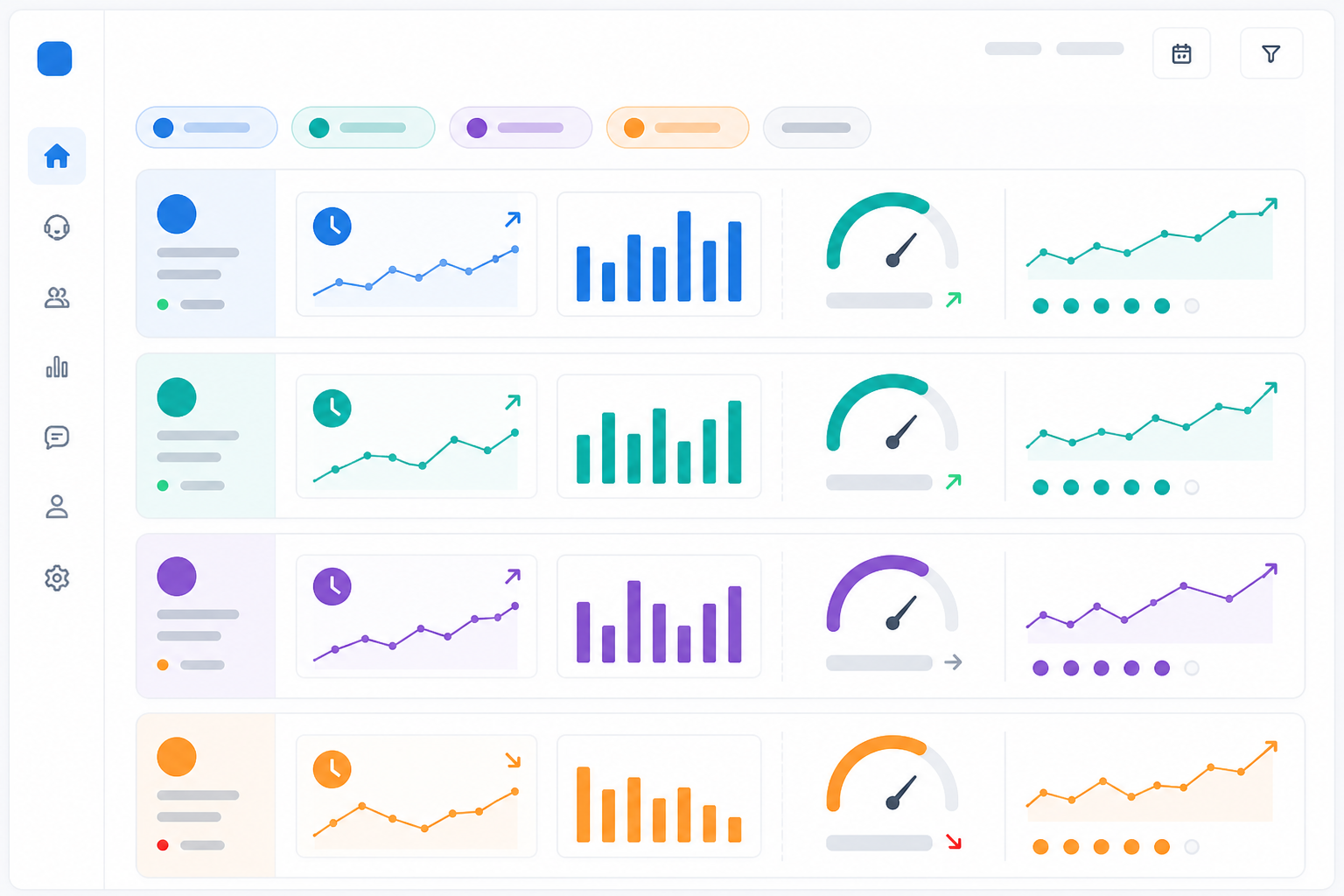
Good reporting segmentation also makes team collaboration across brands noticeably smoother. Team leads can see which brand needs backup, agents can be reassigned based on actual data rather than gut feeling, and nobody is flying blind about which brand is under strain.
If you're evaluating help desk software for a multi-brand operation, ask specifically how granular the reporting is. Brand-level or inbox-level reporting should be a baseline expectation, not a premium add-on.
Long-term savings of flat-rate customer support software
Let's put some numbers next to this, using illustrative seat pricing of £20 per agent per month as a stand-in for the typical mid-market range, compared with Sonny's published flat rate of £19.99/month for unlimited agents.
| Team size | Seat-based cost (illustrative, £20/seat/month) | Sonny flat rate | Annual difference |
|---|---|---|---|
| 5 agents | £100/month (£1,200/year) | £19.99/month (£239.88/year) | ~£960/year saved |
| 10 agents | £200/month (£2,400/year) | £19.99/month (£239.88/year) | ~£2,160/year saved |
| 15 agents | £300/month (£3,600/year) | £19.99/month (£239.88/year) | ~£3,360/year saved |
These seat-based figures are illustrative rather than taken from a single named competitor, since per-seat pricing varies by provider, region, and plan tier. However, the £15–£25 range is common enough in the market for the pattern to hold directionally.
The bigger point is not the exact pound figure, but the shape of the curve: seat-based costs increase with every hire, while flat pricing stays flat. For a team that expects to grow, that gap can widen over time.
Beyond the raw pricing, consider other factors when comparing options. Sonny offers a 7-day trial, which may be enough time to test whether brand tagging and reporting segmentation fit your workflow before committing. The platform also lists a 99.9% uptime SLA, which matters when you rely on one help desk across several brands. Downtime during a peak sales period is not just inconvenient; it can affect revenue and customer satisfaction.
As with any vendor claim, check the current status page and support documentation to confirm that SLA terms remain in effect when you sign up.
The budgeting takeaway is straightforward: flat pricing turns your customer support software from a variable cost that can work against growth into a fixed cost that supports it. That's a meaningfully different position from which to plan your hiring calendar.
Frequently asked questions about unlimited-agent help desk pricing
What does unlimited-agent pricing mean for support software?
It means you pay one flat monthly fee for the platform regardless of how many agents you add, rather than a per-seat charge that increases with every hire. Check whether "unlimited" also covers conversation volume or whether a separate fair-use cap applies as your ticket volume grows.
Can I add more support staff without increasing my subscription cost?
With a genuinely flat-rate plan like Sonny's, adding a seasonal hire or brand specialist should not change your monthly bill. Confirm that the specific plan includes unlimited agents rather than a capped tier, since some providers use "unlimited" loosely while limiting usage elsewhere in the terms.
How does flat pricing benefit companies with multiple brands?
Multi-brand teams deal with uneven, staggered demand. One brand's peak season may be another's quiet period. Flat pricing lets you staff up for a specific brand's busy period without a seat-based cost increase or contract renegotiation, then scale back down just as easily when demand falls.
What should I check before choosing unlimited-agent help desk software?
Check the plan's fair-use policy, conversation limits, reporting features, integrations, shared inbox functionality, contract length, support options, and uptime terms. It's also worth testing brand tagging and team workflows during a free trial before you migrate your support operation.
The bottom line: unlimited agents give multi-brand teams more flexibility
Per-seat pricing doesn't just cost you money; it costs you flexibility exactly when you need it most. For teams managing several brands with different seasonal rhythms, that flexibility is the whole game.
If you're currently negotiating headcount through a spreadsheet every time Black Friday approaches, consider testing a flat-rate help desk platform during a trial period. You may find that your team makes faster, more confident staffing decisions when the cost of adding an agent drops to zero.